Flat roofs in and around King’s Lynn ask for respect. Norfolk weather is mild on paper, yet the combination of wind off the Wash, sudden downpours, and winter freeze-thaw cycles can push a flat roof hard. Good drainage is the quiet workhorse that keeps a flat roof out of trouble. When it’s thought through at design stage and maintained with a light but regular touch, you avoid ponding, leaks, and premature ageing of membranes. When it’s ignored, small lapses turn into damp ceilings, slipped insulation, and timber decay. I have seen both ends of that spectrum on homes from North Wootton to South Lynn, and on warehouses out near Saddlebow.
This is a practical look at how competent King’s Lynn Roofers approach drainage on flat roofs, from planning falls to detailing outlets, overflows, and parapets. It suits homeowners with a felt or single-ply roof on an extension, landlords managing low-slope blocks, and facilities managers with commercial roofs that span thousands of square feet. The aim is straightforward: keep water moving, keep the roof fabric dry, and keep maintenance predictable.
Why flat roofs struggle with water
A flat roof is rarely truly flat. Even on new builds, Building Regulations expect a minimum finished fall of 1:80, and most installers aim for 1:40 to allow for construction tolerances and long-term settlement. That margin matters. A roof laid at 1:80 on paper can end up at 1:120 after the screed cures and the timber deflects under load, which is when shallow bowls collect water.
Water that lingers warms and cools more slowly, which stresses the membrane through daily cycles. In winter, standing water turns to ice, expands, and pries at seams. In summer, it accelerates algae growth that can chalk a single-ply surface or hide early blistering. Over time the roof edges and penetrations suffer first, since water finds any imperfection given enough hours sitting still.
On the exposed coastward side of King’s Lynn, wind can drive rain against upstands and parapets, pushing water back onto the roof surface even when the fall is correct. That is why drainage is not just about slope. It is about continuity from the high point to the outlet, redundancy if an outlet blocks, and details able to shed wind-driven rain without allowing it back in.
Pitch, falls, and why the number on the drawing is only a start
You can create falls several ways. On a timber warm roof, fall most often comes from tapered insulation, which is factory cut to known gradients. On concrete decks, it may come from a laid-to-falls screed. On refurbishment, you sometimes step the falls using firring pieces on the joists before reboarding. Each approach has strengths and traps.
With tapered insulation, the thermal performance is excellent and you avoid wet trades. The trick is to think about the footprint. In a simple rectangle, diagonal falls toward a corner outlet can keep thickness modest. On larger roofs with obstacles like rooflights and plant stands, a multi-directional scheme that feeds troughs toward internal outlets can avoid awkward local high points. Costs rise with thickness, so clever routing saves both money and head height at door thresholds.
Screeds suit concrete decks, especially on commercial jobs, but they add weight and need dry weather and patience. A screed that seems flat in April can craze and shrink by June, leaving slight depressions. A roofer in King’s Lynn who has done a row of similar units will know which screed mixes stay truest, and will prefer to keep bays modest to control curl.
Timber fall creation through firrings is simple and affordable on small domestic roofs. I have found that carpenters unfamiliar with flat roofing occasionally overdo the falls, which sounds good until you set a door threshold or an abutment flashing. Keep the main fall steady and make local trims to divert water around skylights, rather than creating steep gullies that trap debris.
The practical lesson: design a fall, then build in tolerance, and plan where the water will actually travel after deflection and settlement. A quick hose test before the membrane goes down costs little and tells the truth.
Outlets, scuppers, and overflows that earn their keep
Drains for flat roofs fall into two camps. Internal outlets feed pipework hidden inside the building, often dropping into the rainwater system. External scuppers or weirs discharge through the parapet to a downpipe. Both can be reliable when detailed properly.
Internal outlets keep façades clean and reduce icing on exterior pipes. They do, however, demand airtightness and a top-quality mechanical connection between the waterproofing and the outlet body. On built-up felt roofs, a hot-welded metal or polypropylene outlet with a broad flange gives a robust bond. On single-ply, use the manufacturer’s compatible outlet. I have replaced too many generic plastic outlets that looked fine at handover and failed after five winters.
For parapets, a scupper with a weathered metal sleeve, a drip detail on the spout, and a wide internal gutter is often the simplest solution for domestic extensions. It is honest about where the water goes, which makes maintenance easier. The weak spot is the parapet upstand. If the scupper is not set low enough, water will pond back inside the roof zone. If it is too high, you lose freeboard and risk overtopping. A good rule of thumb is to set the primary scupper lip 50 to 75 mm above the finished roof surface, then include an overflow a further 25 to 40 mm above that. If the main outlet blocks, the overflow saves the day without flooding the living room.
Commercial roofs in King’s Lynn industrial estates often use box gutters between roofs, feeding 100 mm or larger outlets. Here capacity matters. A run that copes with a typical shower can be overwhelmed by a 1-in-10 storm. Many older gutters have timber liners or corroding mild steel. Upgrading to a fully bonded membrane-lined gutter with sumps formed at outlets gives you both capacity and a smooth flow path.
One more point rarely said aloud: fit a leaf and gravel guard that you can remove from the roof side without tools. Guards fixed with tiny screws vanish under silt. A simple basket that unclips makes a November clean far more likely to happen.
Sizing for the rain we actually get
Rainfall intensity varies across the UK. The King’s Lynn area sees annual totals in the 500 to 650 mm range, which is not extreme, but short bursts can be sharp when a North Sea front hits warm land air. Drainage design uses intensity over a given duration, not annual totals. For small domestic roofs, it is common to align with a 1-in-1 or 1-in-2 year storm for primary capacity and rely on overflows for more severe events. For schools, hospitals, or critical infrastructure, you design for higher return periods and keep a safety margin.
As a working heuristic for modest roofs up to 50 square metres, a single 75 mm internal outlet or a 100 by 100 mm scupper will usually cope if the falls are clean and the surface kept clear. Beyond that, split the catchment and use more than one outlet. Two medium outlets placed sensibly beat one large outlet at one end. Wind drives water sideways, so distributing inlets reduces the chance of all the water trying to reach a single low corner.
On big commercial roofs, you should be looking at hydraulic calculations or manufacturer guidance. Sump fittings increase capacity dramatically by creating a local depression, which helps the head of water collect and flow. Syphonic systems can move large volumes through smaller downpipes when designed and maintained well, but they demand precise high-level pipework and air-tightness in every joint. For many regional buildings the simpler gravity system with adequate pipe diameters and accessible rodding points is the safer long-term choice.
Warm roofs, cold roofs, and why drainage detail ties to build-up
A warm roof places insulation above the deck, with the membrane above the insulation. Most modern domestic and light commercial flat roofs in King’s Lynn are warm roofs because they avoid interstitial condensation risk when properly detailed. Warm roofs raise the finished surface, so thresholds, parapet heights, and rooflight kerbs must be set to maintain freeboard. The drainage detail at outlets needs a sump or preformed drop so the membrane can fall into the outlet without pinching around the insulation edge. Many tapered systems include flat oversleeves for that reason.
Cold roofs place insulation between the joists, with a ventilated void below the deck. They are less common in new work and trickier to bring up to standard during refurbishment. With cold roofs, the outlet spigot must pass through the deck and vapour control layer, and you need a reliable air seal. I have seen condensation track down an outlet body, drip onto back-of-ceiling plasterboard, and get mistaken for a leak. The cure was not sealant around the outlet, but a proper vapour collar and a warm roof conversion.
Inverted roofs, where the membrane lies below insulation ballast, put drainage at the heart of the build. Water that percolates through the ballast must drain off the membrane via a filter layer into outlets with dual-level gratings. If the filter clogs, the insulation sits in water, loses thermal performance, and invites moss. These roofs reward a scheduled maintenance pass more than any other flat roof type.
Parapets, edges, and the small details that keep water out
Edge detailing is where many roofs either last decades or fail within five years. On a parapet roof, the membrane should turn up and over, or up to a properly fixed and sealed metal capping. The capping needs a drip edge outside the wall face so water does not track back. Joints in the capping want laps oriented away from prevailing wind where possible. A parapet that looks neat from the ground but has horizontal laps facing the harbour wind will let driven rain find its way in.
At the eaves of roofs without parapets, a metal drip trim fixed to sound timber gives a clean edge. The trim must project enough for water to fall free, not run down a fascia. Where the roof meets a wall, water is only as safe as the upstand height and the flashing seal. The old habit of chasing a narrow flashing into a shallow slot and pointing with mastic is not fit for long service. A deep chase, a proper lead or compatible metal flashing, and a sealant rated for UV and movement gives you the years you want. On rendered walls, a bellcast bead above the flashing reduces staining and water tracking.
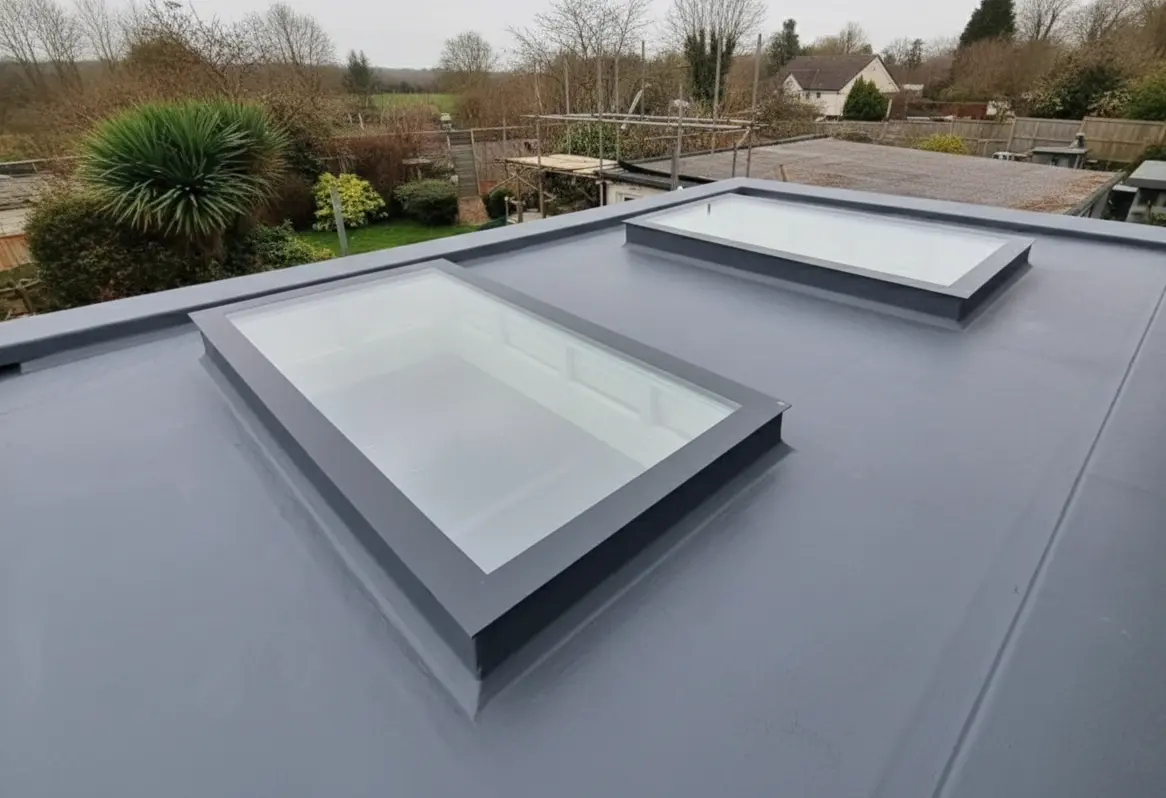
Kerbs around rooflights and plant should sit at least 150 mm above the finished roof level in the UK climate. That height feels belt-and-braces on a tidy day, but during sleet and leaf fall it buys you insurance. I have replaced countless low kerbs on 1990s extensions where an otherwise sound membrane could not beat water that had nowhere to go.
Ponding water: causes, consequences, and practical remedies
Ponding is not a moral failing. It is a sign that the deck has moved, a gully is too shallow, or an outlet is in the wrong place. Felt and single-ply manufacturers tolerate small areas of ponding, but you should not accept them if you can correct them affordably.
On felt roofs with local depressions, a repair can be as simple as building a small sump around the outlet with compatible materials, or adding a tapered infill to divert water. On single-ply, the trick is to use manufacturer-approved crickets and to avoid sharp angles that stress the membrane. Where the deck has sagged between joists, the honest repair is often structural. Sistering joists, adding a plywood overlay, and re-laying falls with tapered insulation transforms the roof and reduces future risk.

I have seen owners try to fix ponding by drilling extra holes through parapets without a proper sleeve. That solves a puddle and creates a damp patch inside the wall. Any new outlet needs a full-through sleeve, a formed throat that encourages flow, and a finish that prevents water tracking along masonry.
Maintenance that saves money rather than costs it
A flat roof does not ask for much. The problem is that even the little it asks is easy to postpone. In King’s Lynn, I advise a twice-yearly check, once after leaf fall and once in spring. Commercial roofs that gather wind-blown debris or support plant may want quarterly checks. The work is not glamorous, but it prevents 80 percent of emergencies.
Short maintenance checklist:
- Clear leaves, twigs, and silt from outlets, scuppers, and guards. Sweep debris away from upstands and corners where it traps moisture. Inspect seams, laps, and terminations for lifting or cracking. Check parapet caps, trims, and flashings for loose fixings and open joints. Test overflows by briefly damming the primary outlet with a hand, then releasing.
This small routine stabilises the roof’s condition. You will catch blistering before it opens, spot a pinhole in a joint, and see whether pigeons have moved the outlet guard again. Keep a simple log with dates and a couple of photos. When you do need a roofer, that record trims site time and cost because everyone is looking at the same evidence.
Materials and compatibility matter more than brand names
The King’s Lynn market sees plenty of SBS and APP modified bitumen, single-ply membranes like PVC and TPO, liquid-applied systems, and, less often on new builds, traditional hot-melt or mastic asphalt. All can drain well, and all can fail if the wrong accessory is pushed into service.
Single-ply wants compatible plastics at outlets and corners. Bitumen wants metal or bituminous-compatible polymer flanges. Liquid systems love complex shapes but need dry, dust-free substrates. If you mix a PVC outlet into a TPO roof without a proper adaptor, the joint will be the weak link. When you bring in a roofer King’s Lynn homeowners trust, you should hear them talk about the exact accessory fittings and primer types, not just the main membrane roll. Details make drains last.
When to repair, when to retrofit, and when to start again
Small domestic roofs that leak near an outlet often respond well to localised repairs. Renew the outlet with a larger sump, add a tapered crick around a rooflight, reseal a flashing that a storm opened. If the roof is only five to ten years old and the membrane remains supple, that is the sensible route.
If the deck is soft underfoot or the roof has a patchwork of materials from prior jobs, the money is better spent on a stripped or overlay re-roof. An overlay with tapered insulation can turn a chronic drainer into a roof that dries in minutes after rain. For overlays, verify that the existing membrane is stable and compatible, and that you are not trapping moisture in the old system. A core sample answers both.
Commercial roofs deserve a strategic view. If a 2,000 square metre roof has three outlets serving half the area, adding two more outlets and cutting new fall breaks can halve ponding even before re-roofing. A staged plan that addresses drainage now and finishes with a new surface in a year or two often spreads cost without wasting effort. King’s Lynn Roofers who look after industrial estates tend to propose these phased works because they fit budgets and keep operations running.
Local realities in King’s Lynn: wind, leaves, gulls, and grit
Every town has micro-issues. In King’s Lynn, wind that whips around gables often drives debris into the leeward corners. Trees near the historic centre and along the riverfront fill gutters in late October and November. Gulls like flat roofs, and their nesting habits include moving lightweight guards and dropping shells that crack brittle seals.
I have taken to specifying heavier outlet guards with quick-release catches on roofs where gulls are frequent visitors. On buildings close to the port, salt in the air can creep under poorly made paint films on metal trims. Bare aluminium or properly anodised and powder-coated metal fares better than cheap galvanised steel that begins to rust within a couple of winters.
Newer estates on the south side see fine grit from nearby worksites during the building season. Silt is the silent enemy of drainage. It does not look like much, but a few millimetres over 30 square metres is many kilos of obstructive paste. If your roof collects silt, a light sweep with a soft broom and a gentle hose rinse twice a year is as valuable as any chemical treatment.
Working with professionals without overpaying for mystery
A good roofer is part engineer, part craftsperson, and part caretaker. They should be able to explain why water moves the way it does on your roof, what will happen if nothing is done, and what the options cost in both money and disruption. When you speak with King’s Lynn Roofers, ask to see how they propose to route water, not just what membrane they plan to use. A sketch that marks high lines, low lines, outlets, and overflows tells you they have thought about it.
Clear scope helps control cost. If you are paying for tapered insulation, confirm the design thicknesses and falls, and where sumps are set. If overflows are part of the design, agree their height relative to the finished surface. If you live in a conservation area, check whether parapet alterations or new external downpipes need permissions, and plan finishes that respect the building.
One final thought on budgets. It is tempting to shave cost by using a single outlet or leaving out the overflow because the primary drain is “large enough.” The money saved today returns as a callout on a foul-weather evening. Redundancy in drainage is not a luxury. It is a low-cost insurance policy that pays back the first time leaves pile up on a wet Sunday.
A quick case from the field
A terraced house near the Walks had a flat roof over a kitchen extension, 18 square metres, felted about eight years prior. The owner reported occasional drips above the archway during heavy rain. From above, there were two problems. The only outlet was a small scupper midway along the parapet, its lip nearly level with the roof. A shallow dip had formed about a metre away, so water needed to climb to reach the scupper. When wind drove rain toward the house, the pond sat for hours.
We cut in a new scupper 40 mm lower with a proper sleeve, formed a gentle cricket that nudged water King's Lynn Roofers toward both outlets, and sealed a tired flashing against the rear wall. We added a small overflow at the opposite end of the parapet, set 30 mm higher than the new scupper. After the first downpour, the owner sent a photo of the roof clearing in under ten minutes. No drama, no high-end products, just physics made easy.
On a larger job at a warehouse near Hardwick Narrows, box gutters between pitched roofs were undersized and clogged by silt. We installed preformed sumps, upgraded outlets from 75 to 100 mm, added rodding points at ground level, and switched the gutter lining to a fully bonded single-ply with protection strips where ladders sit. The gutters went from ponding daily to running dry after showers, and maintenance time halved because the team could clear blockages from the ground.
Practical steps for owners and managers
Short planning checklist before any flat roof drainage work:
- Map how water should flow, then test it with a hose before final finishes. Choose outlet types that match your membrane and that you can clean easily. Include at least one overflow per catchment, set just above the main outlet. Keep upstand and kerb heights at 150 mm where practicable for resilience. Schedule simple maintenance twice a year and keep a short photo log.
Flat roof drainage is not glamorous, but it is decisive. When done with care, it fades into the background and your roof simply works through weather that would have caused headaches before. Whether you are reviewing a small extension in Gaywood or a commercial roof on the outskirts, the principles hold. Plan the falls, fit the right outlets with redundancy, detail the edges properly, and maintain little and often. That is how experienced teams, the kind of roofer King’s Lynn relies on, keep water where it belongs.